
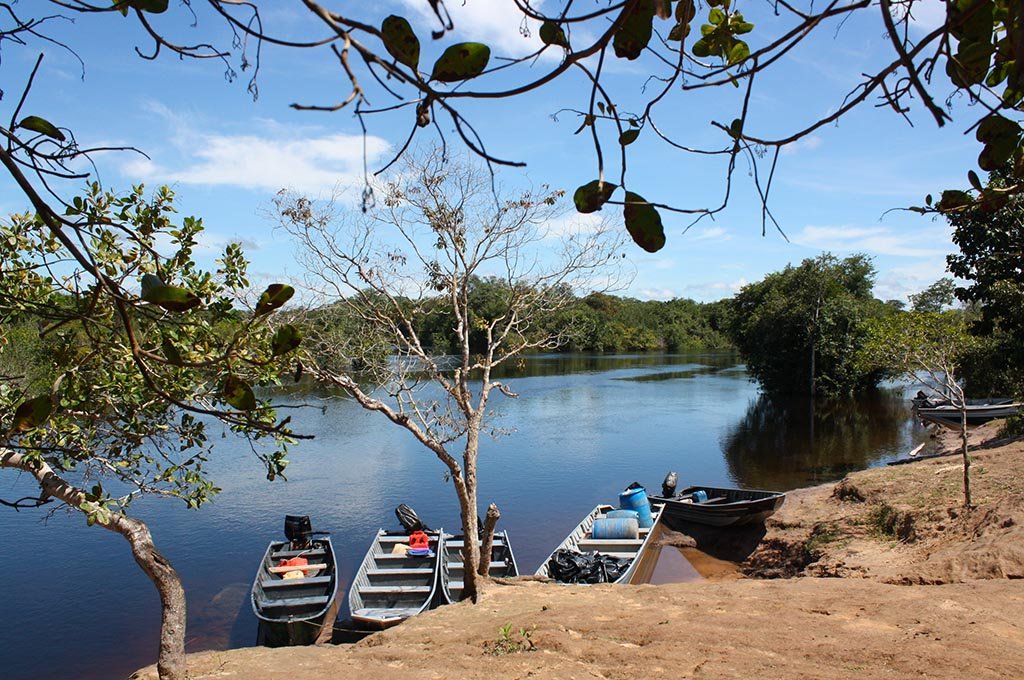
Territorial monitoring
Today the Xingu Territory is an island surrounded by deforestation caused by soy, corn and cotton monocultures; the Indigenous population of the Xingu is under growing pressure from deforestation and infrastructure projects.
Learn more
Territorial protection and monitoring is one of the main focuses of the Instituto Aritana's socio-environmental project agenda. The monitoring team works in many parts of the Xingu Indigenous Territory, recording, mapping and carrying out surveys in order to document and report the illegal activities it detects.
This work has already identified threats such as illegal logging, illegal fishing, pesticide-intensive monocultures, gravel extraction and areas overlapping with agribusiness activities. In the field, the teams check the boundaries and locate the FUNAI boundary markers, restoring them and putting up signs where needed.
The agents talk with leaders and their communities and work in partnership with other institutions such as PrevFogo and the Instituto Raoni.
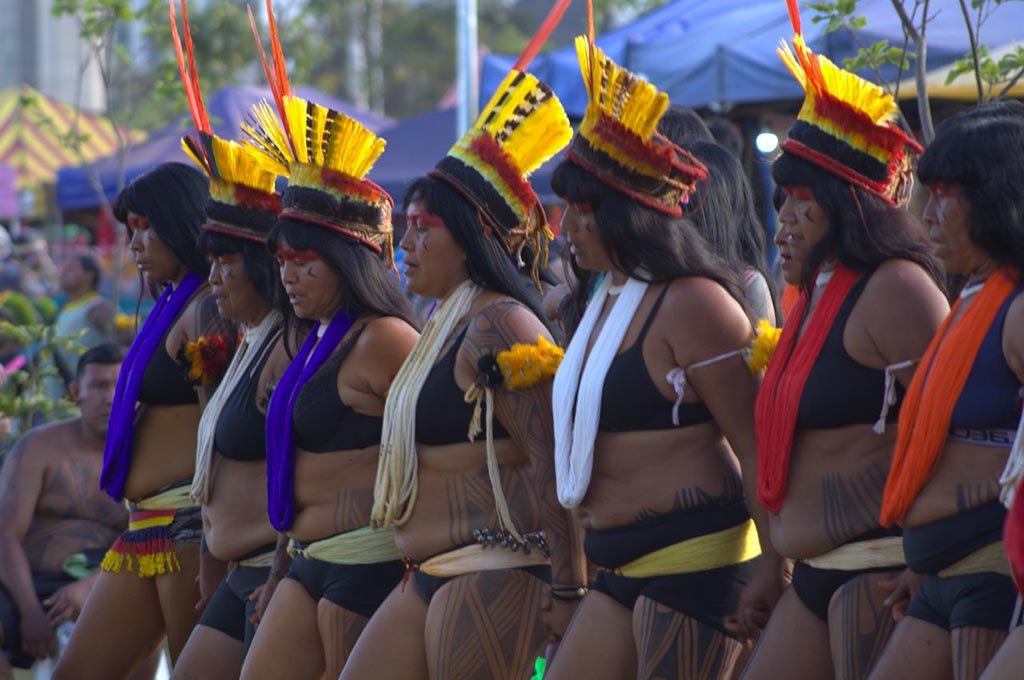
Culture and ancestral rituals
In the Xingu, culture is the root that sustains the territory. Rituals such as the Kuarup keep the memory of the ancestors alive, bring the peoples together and pass on to new generations the knowledge that protects the forest.
Learn more
The Kuarup is the great ceremony of the Upper Xingu peoples in honour of distinguished people who have died. According to tradition, it was Mawutzinin, the creator and first man, who carved the first kuarup from tree trunks to bring the dead back to life. To this day, each trunk painted and adorned in the centre of the village represents the spirit of a deceased leader, bearing the signs of who they were in life: shaman, warrior, hunter or head of family.
Although it is a ceremony in memory of the dead, the Kuarup is a joyful celebration, because the dead do not want to see the living sad. The invited peoples arrive at the host village, songs carry on through the night and, the next day, young wrestlers face each other in huka-huka, the traditional Xingu wrestling. The ritual ends the period of mourning and also marks the coming-out of the young women who have spent months in seclusion to become adults.
For the Instituto Aritana, which bears the name of the great chief Aritana Yawalapiti, who died in 2020, protecting the territory also means protecting these rituals.
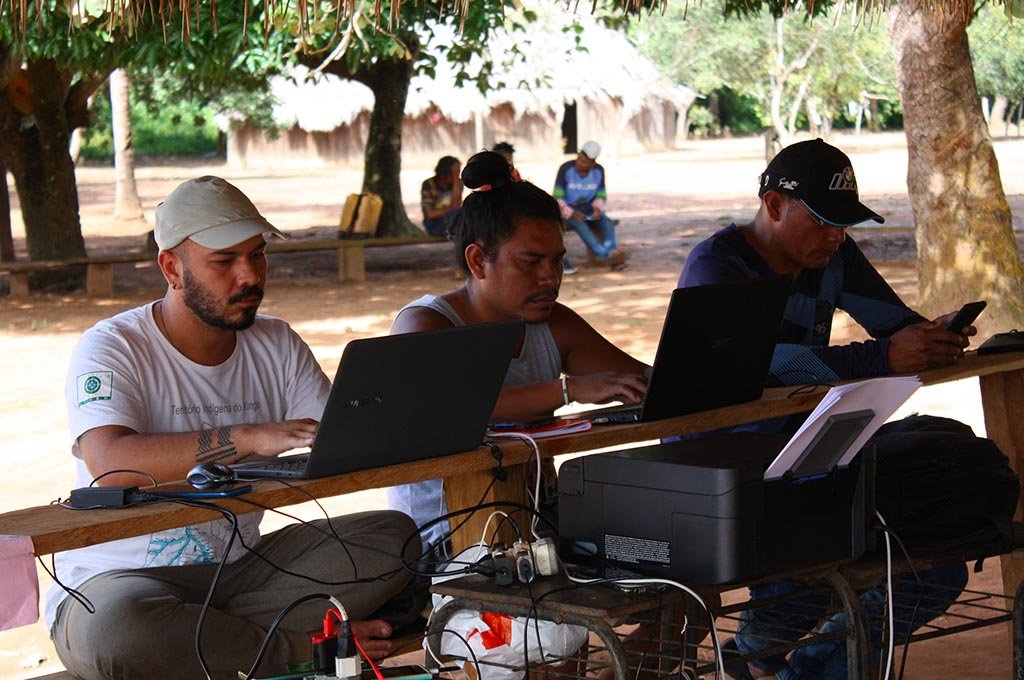
Governance and institutional strengthening
The Instituto Aritana belongs to the sixteen peoples of the Xingu. An Indigenous team coordinates its projects, and every year the Assembly of chiefs sets the priorities and reviews the work carried out.
Learn more
Founded in 2021 in the Yawalapiti village by the chiefs of the peoples of the Xingu Indigenous Territory, the Instituto Aritana counts all sixteen peoples of the territory as its members. Its sovereign Assembly brings together representatives of every people of the Upper, Middle, Lower and Eastern Xingu. It approves the Institute's work plan and accounts and elects its board. A Council of Chiefs guides decisions, and a Fiscal Council oversees financial management.
The Institute's team, chaired by chief Tapi Yawalapiti, includes general, project, financial, administrative and territorial-monitoring coordinators. It coordinates seven Indigenous surveillance brigades, recruited from the communities near the guard posts.
In May 2026, the General Assembly brought together 215 participants at the Leonardo hub, representing the sixteen peoples of the Xingu. It was a moment of accountability, of dialogue with partners and authorities, and of collective decision-making about the future of the territory.
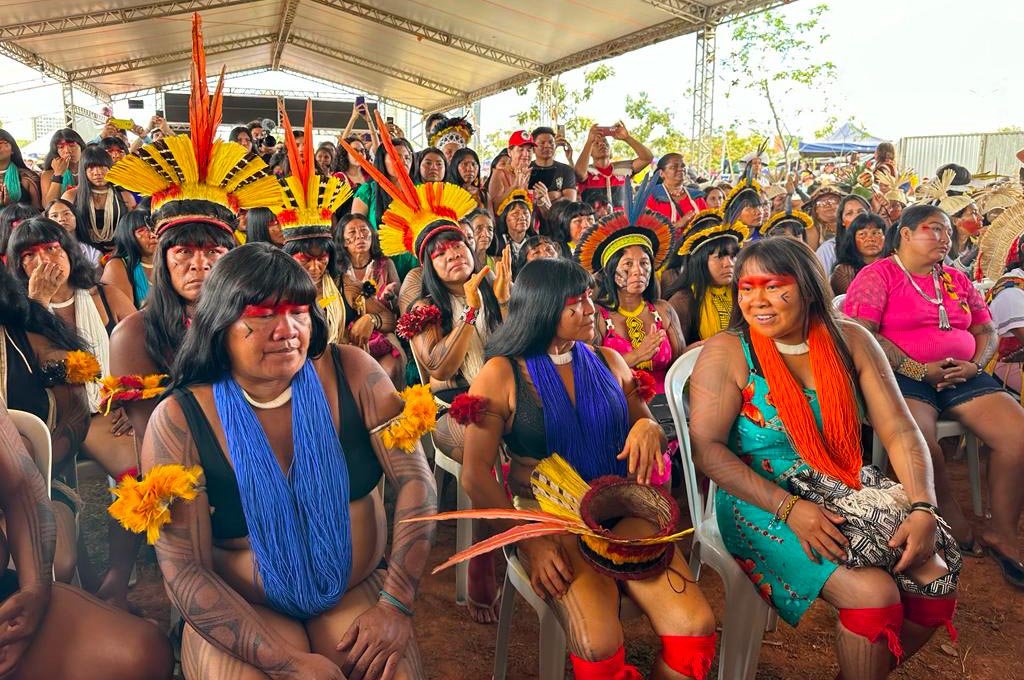
Women of the Xingu
Xingu women are guardians of knowledge, seeds and traditional food. Organised as a movement, they claim their place alongside the men in decisions about the territory.
Learn more
In May 2019, some 200 women from sixteen ethnic groups met for four days in the village of Ilha Grande, in the Middle Xingu, for a historic gathering. While the men took over the cooking and childcare, the women discussed the protection of the territory, the refusal to sell land and timber, traditional food, medicinal plants threatened by climate change, and their participation in political decisions.
This gathering strengthened the Women's Movement of the Xingu Indigenous Territory (MMTIX), with leaders such as Watatakalu Yawalapiti and the shaman Mapulu Kamayurá. Its aim, in the movement's own words, is to stand beside the men: neither in front nor behind. In August 2019, the women of the Xingu took part in large numbers in the first Indigenous Women's March in Brasília.
The Instituto Aritana supports this leadership. Women take part in the consultations on the territory's projects, and protecting the forest safeguards the gardens, the seeds and the knowledge they pass on to new generations.