
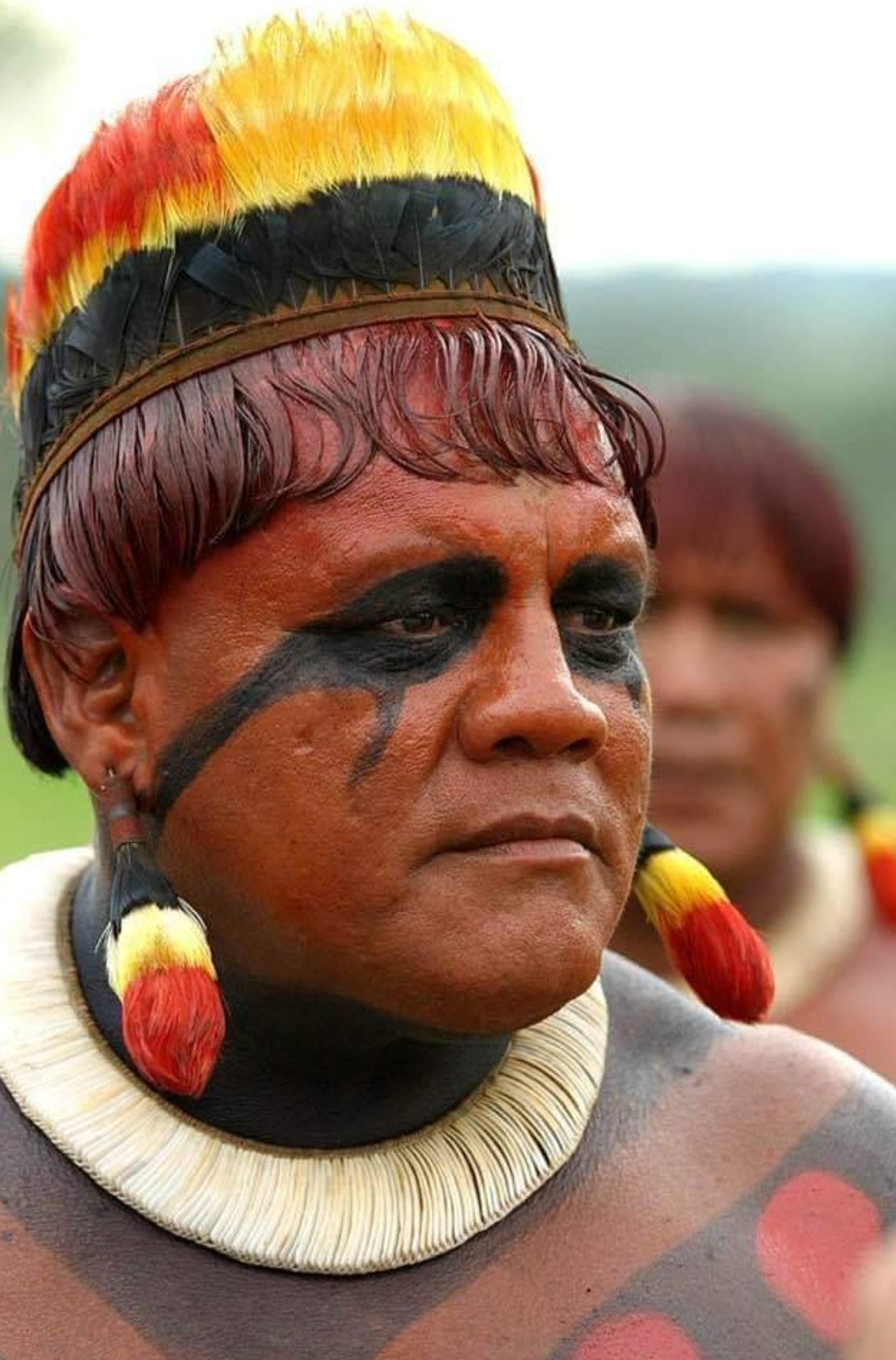
The Instituto Aritana is a private, non-profit legal entity founded in 2021 in honour of Chief Aritana Yawalapíti, who devoted his life to caring for the Xingu Indigenous Territory. It works to keep nature alive and the forest standing, to strengthen the culture of the Indigenous peoples of the Xingu, and to preserve the life of its rivers and fish.
The Instituto Aritana embodies the struggle and unity of the Xingu peoples. Its aims are to help protect the rights of the Indigenous peoples of the Xingu and to strengthen cooperation among their communities in protecting the land and the territory’s resources, ecological restoration, ancestral cultures, education and health.
The Instituto Aritana works in the Xingu Indigenous Park and the Wawi, Pequizal do Naruvôtu and Batovi Indigenous lands. Its members are the peoples of the Upper Xingu: Aweti, Yawalapíti, Mehinako, Wauja, Kamaiura, Kuikuro, Matipu, Kalapalo, Nafukuá and Naruvôtu; of the Eastern Xingu: Kisêdjê and Tapayuna; of the Middle Xingu: Ikpeng and Trumai; and of the Lower Xingu: Kawaiwete and Yudja — 16 Indigenous peoples in all.
The Xingu Indigenous Territory (TIX) is the largest Indigenous territory in the state of Mato Grosso. It was also the first Indigenous territory to be demarcated, in the 1960s, and its demarcation transformed Indigenous policy in Brazil, setting new guidelines and new relations between the government and Indigenous peoples: it established the precedent for the recognition and demarcation of Brazil’s other Indigenous territories. Our territory lies in northern Mato Grosso, in the transition zone between the Legal Amazon and the Cerrado savanna.
The TIX is home to 16 different Indigenous peoples, speaking languages from 4 linguistic trunks (Arawak, Carib, Tupi and Macro-Jê, as well as one people with an isolated language), with a population of around 8,000 Indigenous people. Together they form a great linguistic and cultural mosaic: keepers of ancestral wisdom, great cultural diversity, material cultures and knowledge of sacred traditional medicines. The Xingu peoples perform many spiritual rituals involving the sacred, food and traditional music, in a culture that is both traditional and strong.
Today the Xingu Territory is an island surrounded by deforestation caused by soy, corn and cotton monocultures. The Indigenous population of the Xingu is under growing pressure from deforestation and from infrastructure projects that are affecting our waters and our forests. The large-scale use of pesticides and poisons on monoculture farms is polluting the rivers and threatening the health of our families, which deeply worries us.
We are currently fighting the invasion of loggers in the western part of our territory; the loggers are violent and destroy our forests. This is the central reason for this initiative: to have the means to care for our forests and protect them from invasion by non-Indigenous people. Through projects implemented across the whole territory, the Instituto Aritana carries out territorial monitoring that benefits all 16 peoples living there — because by caring for and monitoring our territorial boundaries, we care for our people, our forest, our rivers and our children.